

WELCOME TO OUR
COPES COLLECTION
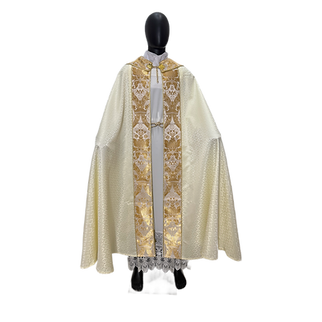
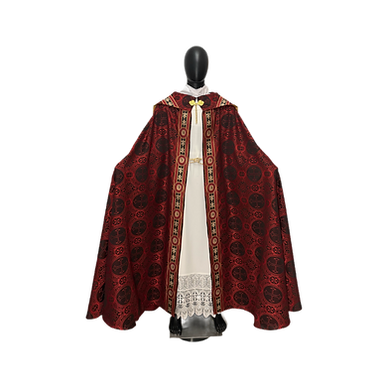
Cope, a liturgical vestment worn by Roman Catholics and some Anglican clergy at non-eucharistic functions. It is a full-length cloak—usually made of silk or other rich material in various colors—formed from a semicircular piece of cloth with a hood attached to the neck. Unlike the similar chasuble, the cope is open at the front and is fastened at the breast by hooks or a brooch. The cope can be worn by all ranks of the clergy and is used in almost all functions in which the chasuble is not worn, such as during processions, blessings, and burials.

A gold cope may be worn during:
-
Eucharistic Adoration and Benediction
-
Processions (Corpus Christi, Marian processions, feast days)
-
Liturgy of the Hours celebrated solemnly (especially Evening Prayer)
-
Blessings (solemn blessings, dedication rites)
-
Exposition of the Blessed Sacrament
-
Certain sacramental celebrations outside of Mass
Liturgical Color Rules:
Gold is special because:
-
It may replace white, red, or green on solemnities and feasts
-
It cannot replace violet (Advent/Lent) or black (Masses for the Dead)
So a gold cope is often chosen on major feasts like Easter, Christmas, Corpus Christi, or patronal solemnities.
A white cope may be worn during:
-
Eucharistic Adoration and Benediction (most common)
-
Exposition of the Blessed Sacrament
-
Processions (Corpus Christi, Eucharistic, Marian)
-
Solemn celebrations of the Liturgy of the Hours
-
Sacramental rites outside Mass (e.g., weddings, baptisms, blessings)
-
Feasts of the Lord (Christmas, Easter, Ascension, Trinity Sunday)
-
Feasts of the Blessed Virgin Mary
-
Feasts of angels and saints who were not martyrs

A black cope may be worn during:
-
Funeral rites outside of Mass (e.g., vigil services, final commendation).
-
Processions for the dead.
-
All Souls’ Day devotions outside Mass.
-
Absolution of the body (traditional usage).
-
Solemn prayers for the deceased.
-
Certain penitential services.
🎨 Liturgical Color Notes
-
Black is a legitimate liturgical color in the Roman Rite.
-
It is most proper for funerals and Masses for the Dead, though violet or white may be used where permitted by local custom.
-
Black is never used for celebrations of joy or solemn feasts.
A red cope may be worn during:
-
Pentecost (especially for processions, Vespers, or Benediction)
-
Feasts of martyrs
-
Palm Sunday (processions and non-Mass rites)
-
Good Friday services outside Mass (where appropriate)
-
Celebrations emphasizing the Holy Spirit
-
Certain confirmations or mission-focused rites outside Mass.
🎨 Liturgical Color Notes
-
Red follows the same color rules for copes as for other vestments.
-
It may be replaced by gold on especially solemn feasts.
-
Red is never used for penitential seasons as such (Advent/Lent), except on Palm Sunday and Good Friday.

A purple cope may be worn during:
-
Advent (non-festal rites, devotions, and processions)
-
Lent (penitential services, Stations of the Cross)
-
Reconciliation services and communal penance rites
-
Funeral rites outside Mass (where violet is chosen instead of black)
-
All Souls’ Day devotions
-
Blessings or prayer services with a penitential character
🎨 Liturgical Color Notes:
-
Purple is proper to Advent and Lent.
-
It may be replaced by rose on Gaudete or Laetare Sundays (though rose copes are rare).
-
Purple cannot be replaced by gold.
-
Purple is never used for joyful solemnities.
A green cope may be worn during:
-
Ordinary Time celebrations outside Mass
-
Solemn celebrations of the Liturgy of the Hours (Lauds or Vespers)
-
Blessings and devotions during Ordinary Time
-
Processions not tied to a specific feast
-
Parish devotions and prayer services on ferial days
🎨 Liturgical Color Notes
-
Green is used only in Ordinary Time.
-
It may be replaced by gold on more solemn occasions.
-
Green is never used during Advent, Lent, Easter, or major solemnities tied to other colors.
GREEN COPES

ROSE COPES

A rose cope may be worn only on two specific Sundays:
-
Gaudete Sunday (3rd Sunday of Advent)
-
Laetare Sunday (4th Sunday of Lent)
And typically during:
-
Solemn celebrations of the Liturgy of the Hours
-
Processions or devotions outside Mass
-
Benediction or prayer services on those Sundays
Rose is optional, never required. If a parish doesn’t have rose vestments, violet is always correct.
🎨 Liturgical Color Notes
-
Rose replaces violet, not white or gold.
-
Gold does not replace rose.
-
Rose is never used outside Gaudete and Laetare Sundays.
It is worn during:
-
Eucharistic Benediction
-
Exposition of the Blessed Sacrament (when moving the monstrance or ciborium)
-
Eucharistic processions (e.g., Corpus Christi)
-
Reposition of the Blessed Sacrament
It is not worn during Mass.
🎨 Color of the Humeral Veil
-
Usually white or gold
-
May match the cope or liturgical day
-
Gold is often preferred for solemn Benediction
